



The Case for On-Site Data Security Protocols with Legacy IT Systems

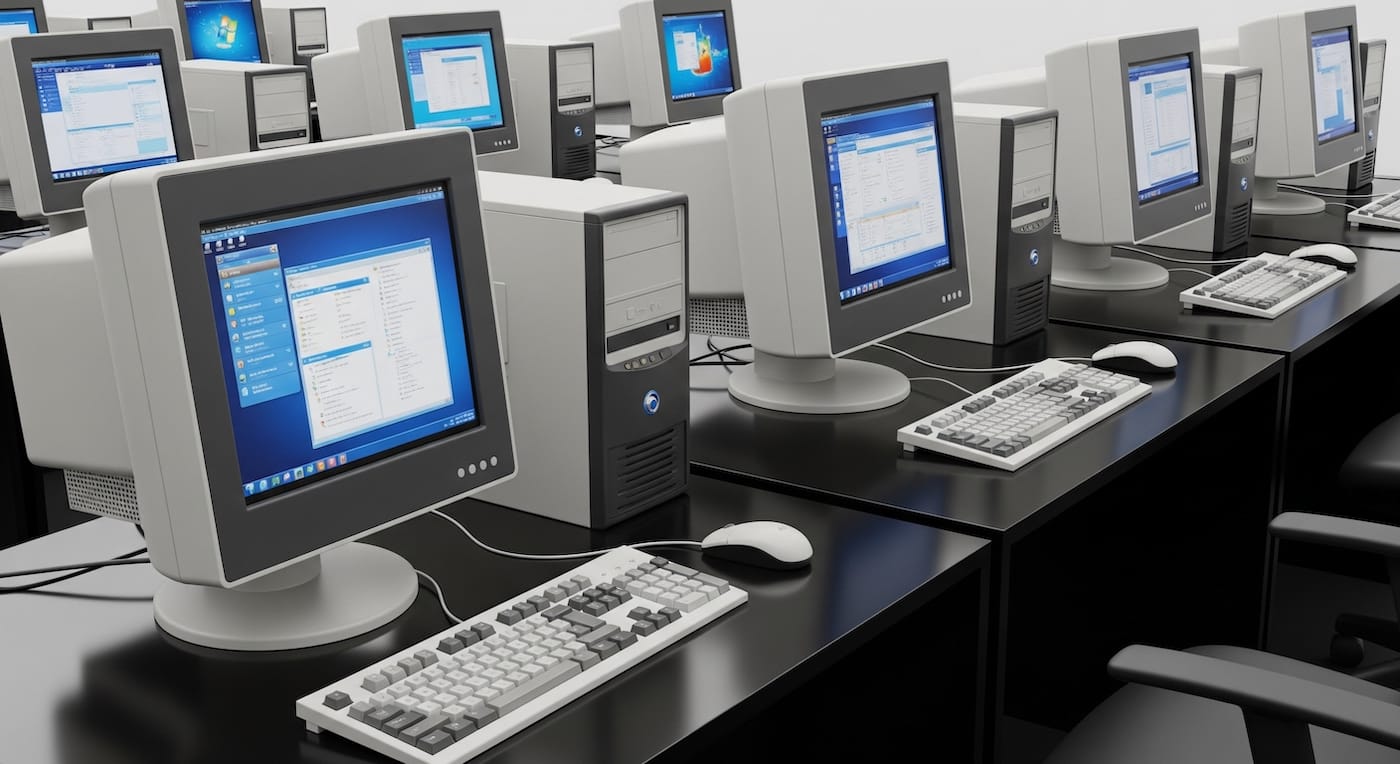
As companies continue to modernize their infrastructure, one of the more complex and often underestimated challenges lies in dealing with legacy IT systems. These outdated systems can contain sensitive and business-critical data, which if not handled properly during a transition, can create serious vulnerabilities.
IT managers face a number of hurdles when planning a switch from older systems to newer platforms. Migrating services and storage setups is never a simple task, especially when systems have been heavily customized or left without regular audits. On top of that, legacy environments often rely on older media formats, leaving teams responsible for secure disposal of hard drives, tapes, and flash memory that may no longer be supported.
One of the most overlooked risks during these transitions is the improper disposal of storage hardware. Data that appears deleted can often be recovered with minimal effort unless the device has been securely wiped. Simply formatting a drive or deleting files is not enough. If a drive ends up in the wrong hands, any sensitive customer, employee, or proprietary business data can be retrieved using off-the-shelf recovery tools.
Larger organizations face added complexity when managing infrastructure across multiple regions or countries. It can be difficult to enforce consistent security standards across distributed teams, especially when policies differ or are loosely followed. As a result, data disposal practices often vary, and this inconsistency can expose organizations to legal and reputational risks.
Embedding secure data destruction as a core policy is a proactive step. Proper procedures must be in place for all locations, and accountability should be shared by both IT and compliance teams. The best approach combines policy with the right tools on-site, eliminating the chance of data being recovered later.
For hard disk drives, the most reliable way to ensure data is gone for good is to use a two-step process: degauss and then destroy. The Datagauss LG Max is a high-powered degausser that completely erases all magnetic data from hard drives and tapes, making recovery impossible. Following this, the Crunch 250 physically destroys the drive by crushing it, leaving no chance for the platters to be reused or scanned.
Operators working with flash media such as SSDs or USB drives can take this a step further. These types of devices do not respond to magnetic erasure. In these cases, shredding to a very fine particle size is a method being increasingly used. The MediaGone 500 reduces solid-state media to 4mm particles, a recognized standard for secure data disposal that ensures no usable fragments remain. This compact system is ideal for teams looking to save space without compromising on security.
For any organization undergoing a large IT transition, secure data destruction is not just a technical issue. It is a strategic choice that protects the business from data breaches and ensures compliance with regulatory standards. Integrating proper tools like the Datagauss LG Max, Crunch 250, and MediaGone 500 into the decommissioning process helps IT managers maintain full control over sensitive data, giving peace of mind during even the most complex infrastructure upgrades.
If you’re looking to securely dispose of legacy media, get in contact with one of our experts today who can recommend you a specific solution for your business: info@vssecurityproducts.com